

First Inspections

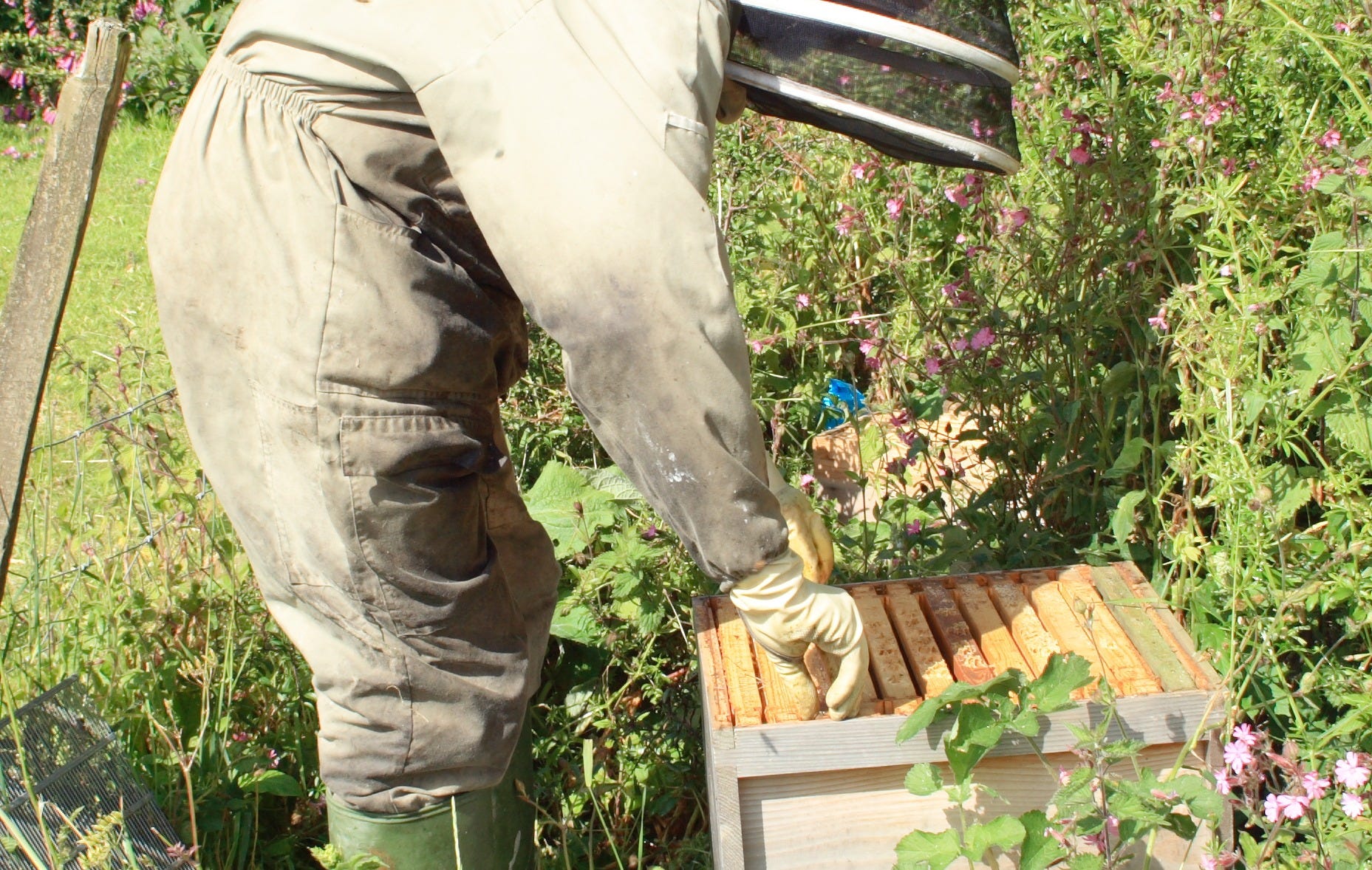
If winter losses are shaped by management in the year before, then the year can be shaped by what we do in spring.
There comes a point where the season stops hinting at arriving and starts to settle. Not perfectly or reliably, but enough. A run of days where the temperature holds, the wind drops away and forage begins to show some consistency. The bees respond in kind.
That is usually when we start. Not because the calendar says so but because conditions do.
It is not a single signal that triggers the first full inspection but a general agreement between them. Warmth that lasts beyond a few hours with bees flying with purpose rather than intermittently.
Until then, we wait. The time was eventually right for us on 6th April. Our blackthorn, which is in a glorious cloud of bloom now, was smothered in bees which is a sure sign that they were ready for their first full inspection. Butterflies were also on the wing in numbers. Red Admirals, Peacocks and Painted Ladies. We also had our first sighting this year of a male Orange Tip. We look forward to our first sighting of them like we look forward to seeing the first swallow of the year which, by coincidence, we also saw on the same day. Everything seemed to be saying, “it’s time to check bees”!
So now it is the time to open colonies, the question is no longer “should we be doing this?” but “what are we looking for now that we are?”
That matters, because it is very easy to go into a hive early in the season without a clear purpose and possibly cause more harm than good.
So what should the purpose be?
The full article is for paid subscribers. Please subscribe to read the rest.
Keep reading with a 7-day free trial
Subscribe to Heather Bell Honey Bees to keep reading this post and get 7 days of free access to the full post archives.