

Between Winter and Something Else

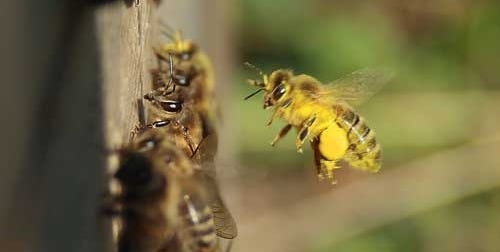
The date is never fixed. The transition is gradual, often hesitant, punctuated by false starts yet the slow, inevitable shift as winter is edged aside is always the highlight of my year. The clocks have changed but while it might not always mean the arrival of spring, it marks the beginning of something else and the beginning of another beekeeping season - uplifting, invigorating and, in principle at least, a time of great joy.
Where there is livestock, there is also deadstock. It’s an old farming truth and honey bees are no exception. For beekeepers, this season rarely arrives without uncertainty. The first hive checks of the year can bring the full range of emotion from joyful surprise to heart-felt loss as colonies reveal how they have endured what always feels like an interminable winter for me.
This past winter, in our area, was defined by what felt like relentless rain and very severe storm damage. Winter temperatures weren’t too bad for the bees. Ideally, we hope for temperatures to remain below 10°C which, in the main, they were. Warmer winters can prevent bees from maintaining a tight overwinter cluster, increasing activity and with it, food consumption. I can’t influence the weather but I can manage the consequences by checking the candy box* provided in autumn and topping up where necessary. Our bees certainly worked their way through them in January and February which were warmer than usual. An additional candy box, filled with dampened British sugar, can simply be placed on top of the existing one - quick, effective and with minimal disturbance.
Checking weather forecasts, if I’m honest, obsessing over them, is part of my life anyway but the approach of spring sharpens that focus. I’m constantly scanning the forecast horizon for the first suitable window to begin checking colonies.
Any colony disturbance is a setback for a colony, much more so, possibly deadly, if it’s cold. A very busy entrance is a good indication that it is warm enough for the bees to have broken their tight cluster and enable us to do a quick check but not removing frames. That day has come as early as February and I can remember more than once when it wasn’t until late April. For us, it is more often than not, a week or so either side of 21st March. That first check, more than any calendar date, really does mean the end of winter for me!


We’ve seen the bees busy collecting pollen for over a month when they’ve been able. We have a lot of Japanese Sekka Willow, sometimes known as the Fasciated Willow (Salix udensis previously known as Salix sachalinensis) that we specifically planted for their abundance of large, flowering catkins that can appear as early as February with copious pollen. They are magnets for a variety of insects besides our honey bees. We saw Buff-Tailed (Bombus terrestris) and Early (Bombus pratorum) queen bumble bees but compared to last year it still feels that the spring warmth is not here yet.
We were also delighted to see our young (8 year) Scots pine trees in flower for the first time which seems very early when I would not expect the flower until May. In any case our honey bees were all over them with pale, nearly white pollen loads ready to be taken home.
Of course, the gorse! Known locally here as furze, we have loads of it and we love it as much as the bees. So many of them are on the flowers that their hum can be heard before they are seen with dark dull orange pollen loads. Gorse seems to always have some flowers available all year round and the bees have been working on it since last December. Thankfully, “kissing is out of favour when the gorse is out of flower”! So plenty of pollen but the willow catkins and gorse produce little or no nectar while the pine gives none at all so I have been out checking their candy feed.
This year, the first good day for a quick check was 18th March so almost exactly on cue. These first colony checks of the year for us are not ‘full inspections’. A quick look down onto the frames is all that’s needed. Removing frames and keeping a colony open and exposed when conditions are borderline does more harm than good so I would characterise these inspections as just checking for ‘proof of life’ to assess winter loss.
It is important to give careful thought to temperature and wind before considering opening a colony, removing frames and exposing the vulnerable baby bees. For me that threshold is calm, sunny and with a temperature of at least 15°C. Often described as ‘shirt sleeve’ weather, if you feel cold in just a shirt then the colony will too. It’s all too easy to lose a queen when removing frames. If that happened in peak season, the colony would rear another. A setback but not the end of the world. If it happened at this time of year when there are probably few drones around, if any, and the weather generally cool, the queen will not successfully mate and cause all sorts of issues.
Often, the entrance tells me everything I need to know. Looking at the entrance is enough to tell me if there are any bees in the hive or if it is a winter loss. Entrance observations can also give immediate clues about colony health. An accumulation of dead bees on the ground or signs of dysentery around the entrance are indicators of poor health that should be investigated when conditions allow.
Just opening the hive to see the candy box is enough to tell me if they have adequate stores to last until next inspection. So, with a confirmation that they are not dead and not in danger of starvation, job done for now. We’ve often read the advice given to ‘heft’ a hive to judge by weight if there are adequate stores for the colony. Sadly, in the past, I’ve witnessed enough cases of ‘isolation starvation’ to know that stores in the comb are no guarantee against starvation.
Hopefully it will soon be warm enough to allow the first full inspections when we concentrate on in-depth queen, brood, health and disease checks but at the moment it seems spring temperatures are nowhere to be seen in our weather forecasts.
We were quite surprised to read a recent local news article that claimed some beekeepers have experienced significant losses over this winter (2025-2026) in South West U.K. The actual percentage of losses will not be available until later in the year but the report cited that losses in the U.K. were 25% last winter (2024-2025) with expectations of higher losses this year. Reasons for the losses reported in the article mention the weather and ‘farming practices’ without any actual diagnosis or explanation why those reasons were to blame. Also notably absent was any suggestion that the choices of beekeepers themselves might play a role.
Those statistics also caught our attention. Our own losses last winter were under 4% and less than 3% this winter. I don’t think that simply makes us lucky or others unlucky.
To me it suggests something else.
Certainly it begs the question, “what makes us different?”